July 1, 2040, 9:02 AM
“Hey girlie, sorry I cut out for a minute there. The signal is unbelievably bad out here. I didn’t realize anywhere was still like this.”
“Lisa, where are you, even? You make it sound like the moon.”
“It feels about like that. More trees though. Hey, sorry, but I gotta go again. Call you back. TSA Checkpoint.”
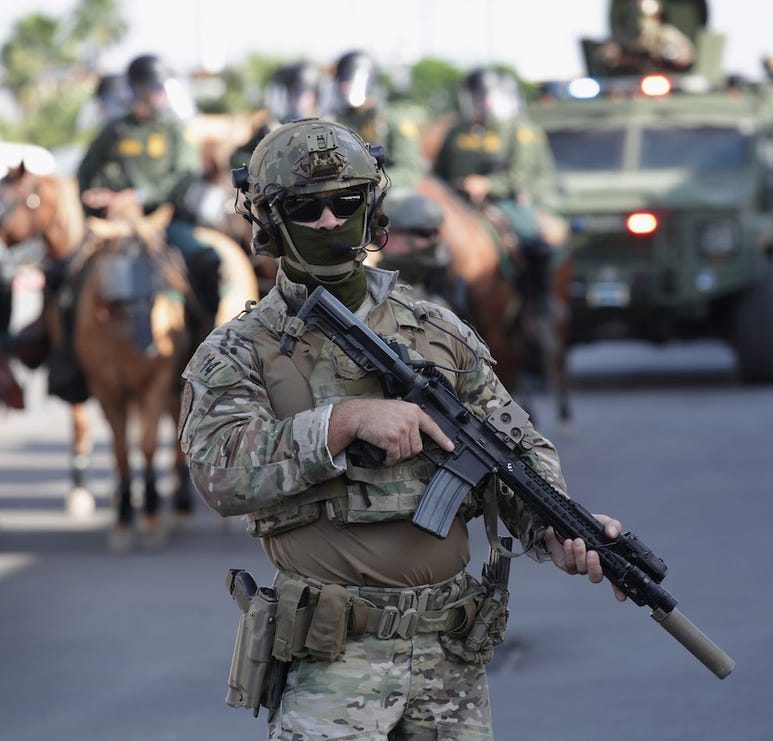
Lisa braked just a bit too abruptly, and the old fleet-model Tesla skidded for a short stretch before she regained control. It had been a long time since she had driven completely unautomated. She eased up to the guard by the striped barricade, who seemed to be glaring at her behind pitch-black aviator lenses. He was sweating in 95-degree sunshine, which likely didn’t help his mood. His hand was on his electric baton.
“Are you looking to hurt somebody, kid?”
“Sorry, it’s my bad,” she said, flushing. “I didn’t think I was going to need to stop again after the state line. Is something going on?”
“That’s why you keep your eyes on the road. Let me see some ID.”
“Okay.” Her voice shook slightly. She hated this about herself. She handed him the badge off the lanyard around her neck. The agent’s eyebrows arched slightly as he inspected it. He ran the badge through a hand-held scanner.
“Is something going on?” she asked again, more firmly.
“Lucky you, you’re government, so we don’t have to search the vehicle,” he said, handing back the badge. “But yes, there was an incident at one of you guys’s field office in Sandusky this morning. Another reason to keep your eyes on the road.” He nodded to another agent who shifted the barrier, and waved her through. Lisa turned around a bend in the two-lane road, and then floored the accelerator.
She thought of calling Jeanine back, just to rant. But she was running late, and the road was narrow, and perhaps the asshole had a point. She rolled down the windows, and breathed in air that, she had to admit, was fresher here, even in the scorching heat, and tried not to think about what “incident” meant.
It didn’t look unsafe around here. Mostly it just looked tired, worn-out. The hilly Ohio countryside was pretty enough, but the human element was rust and chipped paint and cracked pavement. Occasionally something shiny and new would appear to break the monotony–a school, a highway rest stop, an affordable housing block–and invariably it was accompanied by a red sign with white block capitals: “BROUGHT TO YOUR COMMUNITY BY THE AMERICAN REVITALIZATION AUTHORITY.” The architecture was always sleek, rounded, vaguely postmodern, like an alien craft had landed and deployed itself among the cow pastures and dollar stores. Lisa was one of the aliens.
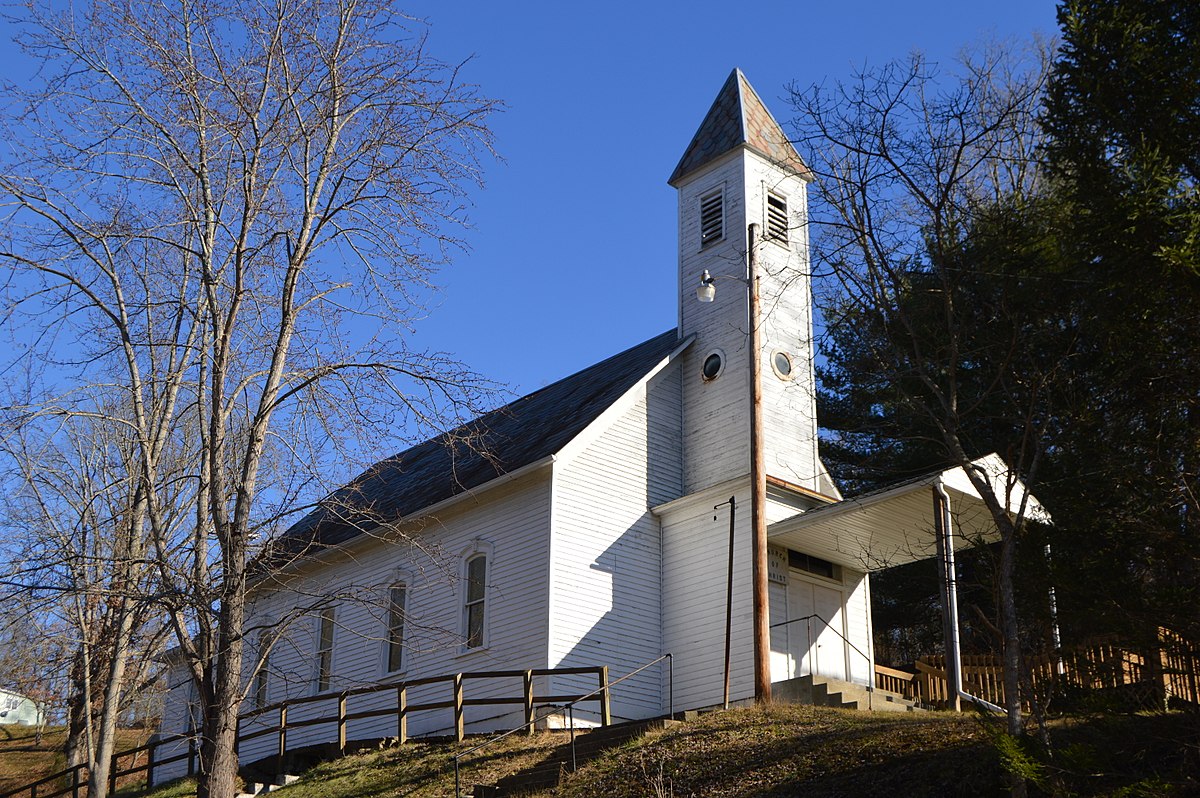
She was surprised, then, when the GPS led her to a white clapboard church on a gentle rise just off the main road. A marker on the gravel path, knocked somewhat askew, read Hemlock Church of Christ. She murmured in annoyance, and made another call. A bored voice answered.
“What’s up?”
“Hi, I got your directions but the address took me to this old church. Tell me again where I’m supposed to be?”
“Right here. See you inside.”
“Huh,” she said, and hung up.
She noticed now there was an FRA bumper sticker plastered to the only other car nearby, a Dengfeng convertible. As Lisa walked toward the entrance, a strange fluttering noise passed over her head, and for a brief moment she spied several bats slipping into the belfry. She shivered, and took a moment on the front steps of the church for her goosebumbs to subside before she went inside.
In the church she found a jumbled array of office furniture, computer equipment, and painting supplies along with a few antique pews and a lectern. Some of the rafters above her head sagged, and the wind whistled through a hole in one of the stained glass windows.
“Pardon our mess,” said the one person inside, a shaggy-haired man in his 30’s. He smoothed his wrinkled FRA polo and went to shake her hand. ” We’re still getting situated. They were supposed to put us in the old post office in New Lexington but they’ve got black mold in there, and I guess this happened to be available. I’m Aaron. I’ll be your supervisor.”
“Lisa Li. Are we the only ones here?”
“Well, for now. It’s a shoestring operation. Like I said earlier, we’ve got you doing both HumCap and Community Relations projects, and we share our media person with six counties around here. We’re supposed to be getting a GreenDev coordinator but she won’t arrive until next week.”
“Cool, I look forward to meeting her too. So…this is different,” she said, gesturing with both hands at the walls and rafters.
“Yeah, this hasn’t been an active church for a long time, I think. It was a sort of local landmark, and it’s the closest thing to prime real estate they have in Hemlock. It would make a good studio conversion, actually, the bones are good.” He looked intrigued by the thought.
“Still, I’ve never seen pews in an office before. I feel like I should say some Hail Marys or whatever.”
“I know, right? Not your typical office vibe. Then again, I guess you could say we’re doing our own sort of missionary work out here. We have to tell all the locals about the three commandments.”
“The what?” She asked, then giggled. “Ah, right. Innovate, Adapt, Connect.”
“Amen,” he said, hands clasped.
“I guess I’m ready to get started.”
“Good. One bit of advice: be careful driving around the first of the month. Everybody’s getting their FD checks and they tend to hit up the liquor stores and the dispensary first chance they get. I don’t blame them, though. The weed shop in Shawnee is halfway decent.”
“That’s good to know.” It was funny to think about the first of the month being such a big deal. Lisa got her Freedom Dividend, same as everyone else, but she had it routed straight to her savings account. She had almost enough socked away for the ski trip to Bolivia she’d been dreaming about.
Lisa’s first field assignment was a presentation at the Salt Lick Community Center. The building was one of the FRA’s sparkling gifts to the area, with a full-sized basketball court, pool, and murals by a selection of diverse eastern Ohio artists. A dozen or so locals turned out, mostly for the snack table, it seemed. Most of them were graying or past graying, though there was a teenager who sat glued to his phone, headphones in and expressionless, as well as a slightly older man in a McDonald’s uniform with a squirming toddler in his lap.
Lisa sent a text to Jeanine: Why does nobody have clothes that fit here? She turned on the projector, which whirred and shot the words “Innovate, Adapt, Connect,” onto the wall behind her.
“Good afternoon everybody,” she said, trying to project her own voice over the general murmur and the cracking of potato chips. “I’m Lisa Li, the Human Capital Development Lead for the FRA’s Perry County Office.” One old woman nodded, looking impressed. The others simply stared. “I’m here to today to talk about the flagship initiative for our office this year, the regional pilot roll-out of the Equal Opportunity Credit program.” The stares grew more intense as she advanced slides and a wall of text appeared. “So what is the the Equal Opportunity Credit program, and how can you make it work for you?”
“How old are you, anyway?” the teenager blurted, hardly looking up from his screen. Lisa blushed for the second time of the day.
“I’m 24.” Eyebrows were raised. “Anyway…”
“And you’re, like, in charge of us all now?”
Another hand darted up. “This is a communist thing, isn’t it? I mean, I don’t want to be rude, but that’s what I heard.” The voice had the gravelly texture of some lung disease or other.
“Ah, well, I had intended to hold questions until the end, but…sure, I can answer that.” She had rehearsed for this one, and the answer flowed with confidence. “That’s a misconception actually, because the EOC system is very different in design and intent than the social credit scores you may have heard about in China and some other countries. The EOC uses a wholistic approach to evaluate clients across a broad range of categories. That includes traditional creditworthiness measures, educational and occupational qualifications, criminal records, community involvement, and good online citizenship, among other measures. But it doesn’t reduce you to a single score, and enrollment is also completely voluntary. I should also add that the EOC has many safeguards in place to protect client data privacy and to advance our goals of equity and inclusion.” She took a breath. The man nodded slowly.
“We’re all gonna need it to use the internet, though, right?” the young father asked.
“Not exactly, but, uh, it is true that particular internet providers may set EOC rating requirements for access to particular tiers of content. That’s to help ensure everyone’s digital safety. I think we all remember what happened with the Shutdown five years ago.” The mention of the Shutdown livened the audience up a bit; they nodded, shuffled in their seats and muttered. “That’s why this is such an important program for everyone. And if you get faster speeds and a bigger whitelist, that’s a nice bonus.” She smiled and skipped ahead to the slide on EOC ratings and interstate and international travel restrictions.
After the Q&A she checked her phone as she was walking out the building.
How’s it going Mistah Kurtz? Jeanine asked. As she wrote a reply she felt the toddler brush past her at a sprint, and locked eyes with the same man for a moment. He grinned sheepishly. He had deep-set brown eyes and slightly yellowed teeth. Feeling an awkward pause, she offered him a leaflet for a workforce training seminar before walking out.
You’re such a nerd, you know I don’t know what that means, she typed. But I think it will be ok here. The people are manageable.
She tried to pick up a bottle of Zinfandel on the way back to her new apartment, but the store, it turned out, was cash-only.
“Are you serious?” she asked the clerk, mouth slightly agape. “I haven’t even been anywhere that hasn’t gone cashless since…I don’t know when.”
The cashier lit a cigarette and shrugged. “Lot of people off the grid around here. Ever since, you know,” she said, and waved her free hand. “Plus everybody says the 7G gives you cancer. Or pedophiles used it to track people. I don’t remember.” She laughed. “That’ll be 12.99.” Lisa dug around in her purse for a moment and came up with a handful of change.
“What can I get for three dollars and…uh, thirty four cents?”
She spent the evening back at her apartment with a box of something called Daytona Heat while she scrolled through email on the sofa. The place was tastefully furnished, if somewhat sterile: it had the look of a hotel lobby that happened to have a bed. It was more spacious than she was used to, and almost unnervingly quiet.
It was getting late. She had been trying to get up early to run, so she laid down and played a recording of the daily FRA all-hands call. It had been the only thing to quiet the nightly hum in her brain lately. Today they were showcasing the hyper-rail line between Pittsburgh and St. Louis. Eden Brickner was speaking in his usual, slightly-monotone rapid fire way.
“This is what I had a passion for in private industry,” he was saying. “Connecting people. Better, faster, and more reliably. Needless to say, I’m thrilled to join with all of y’all in making that happen for all of our stakeholders.” He said ‘y’all’ with the farthest possible thing from a twang. “People in my line of work always say we like to move fast and break things. Well, now I move fast and fix things.” Polite laughter. He paused, and she could see Brickner in her mind’s eye swigging water from the bottle he kept on the transparent lectern. “But our mission will always be to bring that same disruptive energy to making this country competitive.”
She drifted off to the sound of applause, soothed as usual. The stray thought crossed her mind, that not everyone wanted to be disrupted.
 Dispatches from the Coup